


Timo Vesala (MuniFin): Geopolitical pressure could be turned into growth-enhancing investment
01 October 2026Europe has long been accustomed to building its economic success on education, international trade and globally optimised supply chains. The geopolitical rupture has shaken this worldview, forcing attention to shift from identifying opportunities to mitigating vulnerabilities. Concerns over national security, supply chain resilience and the development of artificial intelligence have therefore climbed rapidly to the top of the political agenda.
Against this backdrop, recent discussion among European economists has increasingly focused on how the old continent could turn necessity into a virtue: geopolitical pressure should be channelled into investment that supports growth.
The most effective way to do so is by deepening internal cooperation and economic integration within the EU.
Can strengthening defence capabilities become a driver of growth?
Defence investment has been expected to provide a significant boost to European GDP growth. Economists, however, have not regarded the first steps in this effort as especially promising.
Procurement has been fragmented and focused on equipment and supplies imported from outside Europe. The impact on domestic value added is, for now, set to remain modest.
Coordinated joint projects, investment in research and development, and the strengthening of European defence infrastructure would deliver larger multiplier effects and could generate broader productivity gains for the civilian economy as well.
The root causes of Europe’s technological underperformance lie in its capital market shortcomings
Although Europe produces a great deal of high-quality research, very few companies manage to scale into global technology players.
The main culprit behind this underperformance seems to be Europe’s financial system, which still relies heavily on bank-based debt finance. Yet the key assets of technology and software companies — data, software, expertise and networks — are intangible and cannot readily be pledged as collateral for bank loans.
Deeper and more integrated capital markets would increase equity-based risk financing, strengthen innovation and reduce Europe’s dependence on foreign technology.
In the age of artificial intelligence, the effectiveness of capital markets is likely to matter even more. Productivity gains do not arise from isolated technology spending alone; companies must also invest in software, skills, organisational development and the renewal of business models.
Geopolitics is adding to uncertainty over inflation and interest rates
As a result of the geopolitical realignment, disruptions to supply chains, trade relationships and access to energy may become more common in the future. As inflation is increasingly shaped by supply-side shocks, central banks’ task of safeguarding price stability becomes more difficult.
The electrification of the energy system is also increasing the importance of many critical minerals. Because their production is concentrated in a very small number of countries, the global economy may face additional geopolitical bottlenecks and new inflation risks.
"Europe’s real challenge is to harness the global change as a catalyst for investment that renews the economy."
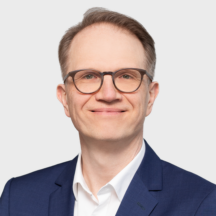
Timo Vesala
Chief Economist
Europe’s real challenge is not to shield itself from global change, but to harness it as a catalyst for investment that renews the economy.
Security, technology and macroeconomic stability policies are closely intertwined. Europe’s real challenge is not to insulate itself from global change, but to use it to accelerate investment that renews the economy.
If Europe succeeds in strengthening its common markets, improving the financing of innovation and reducing its critical dependencies, geopolitical pressure could yet become a source of renewed growth.
Timo Vesala is MuniFin’s Chief Economist and holds a PhD in Economics.
He also authors the views presented in MuniFin’s quarterly Economic Forecast.